If you need a Minneapolis car accident lawyer, Tyroler Leonard Injury Law handles these cases across the full metro. Attorneys Isaac Tyroler and Rachel Sperling Leonard have recovered more than $75 million for injured clients in Minnesota and Wisconsin.
Their team takes cases in English, Spanish, Hmong, Polish, Russian, and Vietnamese, through attorneys and staff who speak those languages directly, not through outside interpreters.
Free case review, 24 hours a day: (952) 567-2488
Table of contents
- What Makes Minneapolis Car Accident Cases Different?
- Do You Have a Claim Outside Your Own Insurance?
- Injuries Commonly Seen After Minneapolis Car Accidents
- What Should You Do in the First 72 Hours After a Crash?
- Compensation Available After a Minneapolis Car Accident
- Who Can Be Held Liable for Your Injuries?
- How a Minneapolis Car Accident Claim Works
- Does Hennepin County Affect What Your Case Is Worth?
- Results in Minneapolis and Minnesota Car Accident Cases
- Frequently Asked Questions
- Talk to a Minneapolis Car Accident Attorney Today
What Makes Minneapolis Car Accident Cases Different?
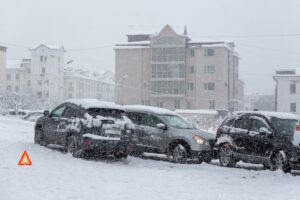
Minneapolis car accident claims are shaped by specific local conditions. The corridors, driving patterns, and court environment here are not interchangeable with other markets.
I-35W and I-394 through downtown. These two corridors carry some of the heaviest commuter traffic in the state. Lane reductions, complex interchanges, and high speeds produce rear-end chains and merge-point crashes. Multiple vehicles often mean multiple insurance policies.
Highway 100 through St. Louis Park. This highway carries more traffic than it was built for. High entry speeds and short merge distances make it a consistent source of serious crashes between the I-394 and Minnetonka Boulevard exits.
Urban intersections. The city grid produces right-angle crashes, pedestrian strikes, and cyclist collisions at controlled intersections. Hennepin Avenue, Lake Street, Franklin Avenue, and Washington Avenue see this regularly.
Winter conditions. Minneapolis averages more than 50 inches of snow annually. Bridge decks on I-94 and I-35W ice before surrounding roads do. Poor conditions do not remove a driver's legal responsibility to operate their vehicle with care.
Rideshare crashes. Target Field, U.S. Bank Stadium, and the Target Center generate heavy Uber and Lyft traffic. Rideshare crashes involve multiple insurance layers that require a different investigation than a standard two-car accident.
Do You Have a Claim Outside Your Own Insurance?
You may have a claim against the at-fault driver if your medical expenses exceeded $4,000, your injuries are permanent, or you were unable to work for 60 or more days.
Minnesota is a no-fault state. That means your own Personal Injury Protection (PIP) coverage pays your first medical bills and some lost wages after a car crash, regardless of who caused it. PIP does not require proving fault in a car accident.
PIP has two limits that matter. First, its dollar caps are low for serious injuries. Second, it does not cover pain and suffering or long-term income loss.
If your injury meets any of the three thresholds above, you can step outside the no-fault system. That opens up compensation categories PIP cannot reach.
Insurers sometimes suggest your injuries are within PIP limits and nothing more is available. That is worth checking before you accept it. Attorneys Isaac Tyroler and Rachel Sperling Leonard review cases at no cost and give you a direct answer.
Injuries Commonly Seen After Minneapolis Car Accidents
Car accidents produce a range of injuries, and their severity often does not match what the vehicles look like afterward.
| Injury Type | Description |
|---|---|
| Traumatic brain injury (TBI) | Head impacts can cause concussions and brain injuries. Symptoms may be delayed. |
| Spinal cord and disc injuries | Spinal compression can cause herniated discs, nerve damage, or paralysis. Often requires surgery and therapy. |
| Soft tissue injuries | Includes whiplash. Affects tendons, ligaments, and muscles. Symptoms may worsen over days. |
| Broken bones | Includes arms, legs, ribs, face, and pelvis. Often requires surgical repair and hardware. |
| Internal injuries | Organ damage and internal bleeding. May lack immediate symptoms, requiring prompt evaluation. |
| Knee and shoulder injuries | Caused by bracing or airbags. Frequently requires surgical intervention. |
| PTSD and psychological injury | Includes anxiety, nightmares, and hypervigilance. Compensable under Minnesota law. |
What Should You Do in the First 72 Hours After a Crash?
Get medical attention right away, even if you feel relatively fine. Then protect the evidence in a car accident case.
See a doctor the same day. Whiplash, concussions, and disc injuries often take days to fully show up. A gap between the crash and your first doctor visit gives insurers a reason to argue your injuries were not serious.
Document everything at the scene. Take photos of the vehicles, road conditions, and your injuries. Get the names and contact information of witnesses. Write down the police report number.
Do not give a recorded statement to the other driver's insurer. They may call the same day. You are not required to give that statement, and those calls are designed to create inconsistencies that reduce your claim's value later.
Do not sign or accept anything. A quick settlement offer in the first week is almost always below what your case is actually worth. Once you sign, your claim is closed permanently.
Call (952) 567-2488. No obligation, available around the clock.
Compensation Available After a Minneapolis Car Accident
A Minneapolis car accident claim can cover both economic and non-economic losses. Together, these often add up to more than injured people initially expect.
Medical expenses. Emergency care, surgery, physical therapy, medications, specialist visits, and any future treatment your injuries require.
Lost wages and earning capacity. Every paycheck missed during recovery. If your injuries permanently reduce what you can earn, that future difference is also recoverable.
Pain and suffering. Minnesota law recognizes the physical pain and emotional impact of a serious accident as compensable losses. For injuries that affect daily life over months or years, this can be a significant part of the total.
Property damage. Repair or replacement of your vehicle and any other property damaged in the crash.
Punitive damages. Available in cases involving deliberate disregard for others' safety. Drunk driving cases are the most common example in Minneapolis car accident litigation.
Who Can Be Held Liable for Your Injuries?

The at-fault driver is the starting point, but not always the only liable party. Identifying every responsible party can change what a case is worth significantly.
The at-fault driver. Their insurer is the first source of recovery. If their policy limits are too low, your own uninsured and underinsured motorist coverage (UM/UIM) may provide additional compensation through your own policy.
An employer. If the driver was working at the time of the crash — making deliveries, driving between job sites, or using a company vehicle — their employer may share liability. Employer coverage limits are usually much higher than personal auto policies.
A rideshare platform. If an Uber or Lyft driver was actively on a trip, the platform's commercial coverage may apply. Determining which policy tier governs at the exact moment of impact requires documentation from the platform's records.
A manufacturer. If a defect caused or contributed to the crash — a brake failure, a tire blowout from a manufacturing flaw, a safety system that did not deploy — the manufacturer can be liable separately from what any driver did.
A government entity. Failed signals, poor road design, or deferred maintenance on a city street or state highway can make a public entity responsible. Claims against public entities have specific procedural requirements.
Attorneys Isaac Tyroler and Rachel Sperling Leonard investigate all potential sources of liability before sending a demand. Missing a responsible party is one of the most consequential mistakes in a car accident case.
How a Minneapolis Car Accident Claim Works
Most people who contact Tyroler Leonard Injury Law have not hired a personal injury attorney before. Here is how a car accident case typically moves from the first call to resolution.
Step 1 — Free consultation. The first call or meeting carries no cost and no obligation. Our attorneys ask about the accident, the injuries, the medical care received so far, and what the insurance companies have communicated. Bring any police report number, insurance information, or medical records you have. If you do not have those yet, that is not a barrier.
Step 2 — Medical treatment and documentation. Before anything else, continue your medical care and document it thoroughly. Every appointment, prescription, referral, and diagnosis creates the record that forms the foundation of your claim. Stopping treatment early — even when you feel better — gives insurers grounds to argue your injuries were not as serious as claimed.
Step 3 — Investigation. Our attorneys gather police reports, witness statements, and any available surveillance or dashcam footage. In crashes involving commercial vehicles, black box data and driver logs become important. In cases where fault is genuinely disputed, we may bring in an accident reconstruction specialist. Cell phone records can be relevant when distracted driving is suspected.
Step 4 — Identifying all liable parties. One of the most consequential early steps is confirming everyone responsible for the crash. This may include the at-fault driver, their employer, a rideshare platform, a parts manufacturer, or a government entity. Missing a liable party early limits what is ultimately recoverable.
Step 5 — Demand package. Once the full scope of injuries, treatment costs, and economic losses is documented, our attorneys prepare a comprehensive demand package. This presents the medical evidence, the liability analysis, and the full range of damages — not only the bills already paid.
Step 6 — Negotiation. Most Minneapolis car accident cases resolve through negotiation. Our attorneys respond to lowball offers with evidence and analysis. When an insurer is not moving toward fair value, we communicate clearly what happens if the case proceeds to litigation.
Step 7 — Mediation, if applicable. Some cases go through a formal mediation process where a neutral third party facilitates settlement discussions. This is common in cases with high damages or disputed liability where both sides want to avoid the cost and uncertainty of trial.
Step 8 — Trial. If a fair settlement cannot be reached, the case is tried in Hennepin County District Court. Tyroler Leonard Injury Law is prepared to try cases when trial is what it takes to get a fair result. The record of actually doing so shapes how opposing adjusters and defense attorneys approach cases from our firm from the beginning.
Does Hennepin County Affect What Your Case Is Worth?

Yes. Where a case is litigated affects what both sides put on the table during negotiations.
Minneapolis car accident cases that reach litigation are filed in Hennepin County District Court, part of Minnesota's 4th Judicial District. Hennepin County juries are drawn from an urban population. They tend to evaluate medical evidence closely and are skeptical of insurer arguments that minimize genuine injuries.
Non-economic damage awards in Hennepin County run consistently higher than in rural Minnesota counties. Insurance defense firms track which plaintiffs' attorneys actually take cases to trial and which ones settle to avoid the work.
Attorneys Isaac Tyroler and Rachel Sperling Leonard have a record of litigating in Hennepin County District Court when settlements do not reflect fair value, and Isaac Tyroler also serves on the elected Board of Governors of the Minnesota Association of Justice (MAJ), the statewide organization representing plaintiff-side personal injury attorneys.
That standing affects how opposing adjusters assess cases before any court filing happens.
Results in Minneapolis and Minnesota Car Accident Cases
Attorneys Isaac Tyroler and Rachel Sperling Leonard have recovered more than $75 million for clients in Minnesota and Wisconsin. Results in car accident and related cases include:
- $2,300,000 — Family rear-ended by a semi-truck; vehicle overturned and struck by a second vehicle
- $2,000,000 — Two men seriously injured when a commercial truck pulled into their path
- $1,545,000 — Policy limits for a man struck and killed at a Minneapolis pedestrian crossing
- $1,500,000 — Policy limits for a mother and daughter killed in a commercial vehicle collision
- $1,300,000 — Man with severe injuries after being struck by a truck in Minnesota
- $1,000,000 — Woman who suffered a traumatic brain injury after being struck by a vehicle
- $900,000 — Man with multiple injuries from a serious Minnesota car accident
- $608,000 — Jury verdict for a woman requiring back surgery; the insurer had offered $26,000 before trial
Past results do not guarantee future outcomes. Every case depends on its own facts.
Frequently Asked Questions
The officer cited the other driver. Does that guarantee my case?
A citation is strong evidence of negligence, but it does not guarantee the outcome. The other driver's insurer will still challenge the severity of your injuries and the amount of your damages. A citation makes the liability side easier to establish. It does not settle the case on its own.
The other driver had minimum coverage. What are my real options?
Minimum limits in Minnesota rarely cover the full cost of serious injuries. The first place we look is your own uninsured and underinsured motorist (UM/UIM) coverage. We also check whether any employer, platform company, or third party shares liability. A single underfunded personal policy is not always the ceiling on what is available.
My family members do not speak English. Can your firm represent them?
Yes. Tyroler Leonard Injury Law takes cases in English, Spanish, Hmong, Polish, Russian, and Vietnamese. Your family works directly with attorneys and staff who communicate in their language throughout the entire case. This is not an interpreter service — it is how the firm operates.
My children were in the car when the crash happened. Can their injuries be included?
Each child's injuries are a separate claim. A parent or guardian can file on a minor's behalf. If your children were hurt in the crash, their injuries should be evaluated separately from yours, so contact an attorney promptly even if you are unsure of the overall value of the case.
I was partly at fault. Can I still recover anything?
In most cases, yes. Minnesota's modified comparative fault rule lets you recover as long as your share of fault was not greater than 50 percent. Your recovery is reduced by your fault percentage. If you were 25 percent at fault and total damages were $100,000, you would recover $75,000. Insurers routinely try to inflate a claimant's fault percentage to reduce payouts. Our attorneys challenge those assessments with evidence.
How long do I have to file a car accident lawsuit in Minnesota?
Minnesota's statute of limitations for a personal injury claim is 6 years from the date of the accident. In Wisconsin, the deadline is 3 years. Waiting creates real problems. Evidence degrades, witnesses become harder to find, and dashcam or surveillance footage is often overwritten within weeks. Earlier involvement produces a stronger case.
The other driver was not cited. Can I still file a claim?
Yes. A traffic citation and civil liability are separate standards. Our attorneys build liability cases from physical evidence, witness statements, and the circumstances of the crash. A missing citation does not prevent a claim. It means the investigation has to do more of the work that a citation would have supported.
How much is my Minneapolis car accident case worth?
There is no honest average. Case value depends on the injury, future medical costs, lost earning capacity, clarity of liability, and available insurance. The injury is usually the most consequential factor. A fully resolved soft tissue injury and a permanent spinal injury are in different categories even if they came from the same type of crash. Our attorneys give you a realistic assessment in the initial consultation.
Do I have to go to court?
Most Minneapolis car accident cases settle before trial. What a settlement is worth, though, is shaped by whether the other side believes your attorneys will actually try the case. Preparation for trial affects negotiations before any courtroom is involved. If a case does require trial, it is heard in Hennepin County District Court.
What if my car was drivable after the crash?
Vehicle damage and personal injury do not correlate the way insurers suggest. Low-speed, low-damage crashes regularly produce serious soft tissue injuries, concussions, and disc problems. An insurer who points to minimal vehicle damage to argue minimal injury is making a medical claim without medical evidence. We have handled cases where significant injuries resulted from crashes that left both vehicles drivable.
What if the accident happened in Wisconsin?
Cases arising from accidents in Wisconsin follow Wisconsin law, including its statute of limitations. Wisconsin's personal injury deadline is 3 years from the date of the accident — shorter than Minnesota's 6-year limit. Attorneys Isaac Tyroler and Rachel Sperling Leonard are licensed in both Minnesota and Wisconsin and handle cases that arise in either state.
What does a car accident attorney actually do for my case?
An attorney takes over the investigation, handles all communication with the insurer, identifies every liable party, and prepares the legal documents and demand package. Beyond the mechanics, the presence of experienced attorneys changes how the other side assesses the case, particularly when those attorneys have a demonstrated record of taking cases to trial when needed. Our attorneys track all deadlines, flag issues early, and keep you informed throughout.
Talk to a Minneapolis Car Accident Attorney Today

Tyroler Leonard Injury Law handles car accident cases throughout Minneapolis and the surrounding metro. Offices in Minneapolis, Oakdale, and Willmar. The initial consultation is free and there are no legal fees unless our attorneys recover compensation for you. The firm is also licensed in Wisconsin.
For clients who speak Spanish, Hmong, Polish, Russian, or Vietnamese: you work directly with attorneys and staff who communicate in your language throughout the case.
For clients in Willmar, Oakdale, or anywhere else in Minnesota: distance is not a barrier. The firm handles wrongful death and catastrophic injury cases arising from car accidents statewide.
Minneapolis Office: 5353 Wayzata Blvd, Suite 410, Minneapolis, MN 55416 Phone: (952) 567-2488 Available: 24 hours a day, 7 days a week
Call (952) 567-2488 or contact us at injurylawmn.com/contact