It is the unseen danger of a Minnesota winter. The pavement ahead looks clear and wet, no different from the miles you have already driven. Without warning, your steering goes light, your tires lose grip, and your vehicle begins to slide uncontrollably. You have hit black ice.
When the chaos ends and you are left with a wrecked vehicle and a serious injury, the insurance company for the driver who hit you will quickly blame the road. The adjuster will call it an "act of God" or an "unavoidable accident," suggesting no one is at fault when ice is invisible.
This is a calculated strategy that insurance companies use to deny you compensation. The law, however, demands that drivers anticipate and adapt to hazardous conditions. A Cottage Grove, MN, personal injury lawyer can help ensure the insurance company does not shift responsibility onto the weather.
Knowing the ins and outs of how black ice accidents are handled in Minnesota injury claims means rejecting the insurance company's narrative and proving the crash was not caused by ice alone, but by a driver who failed to respect its predictable danger.
Key takeaways
- Black ice does not excuse a driver from negligence. Minnesota's "basic speed law" requires drivers to slow down and use extra caution when conditions favor ice formation.
- Proving fault in a black ice accident hinges on the legal concept of "foreseeability." An attorney must prove that a reasonable Minnesota driver should have anticipated the potential for ice based on the temperature, location, and recent weather.
- Your No-Fault (PIP) insurance is your primary source for immediate medical bills and lost wages, allowing you to get care while the complex liability investigation proceeds.
- Evidence from weather reports, witness testimony about road conditions, and accident reconstruction can prove a driver was traveling too fast for the foreseeable risk.
- Insurance companies aggressively defend these cases by blaming the weather. An attorney must build a strong, evidence-based legal strategy focused on the driver's negligent choices to overcome this defense.
Challenging the "Unavoidable Accident" Myth
Insurance adjusters frequently use the term "unavoidable accident" after a crash on black ice. They want you to believe that because the ice was invisible, no one could have done anything to prevent the collision.
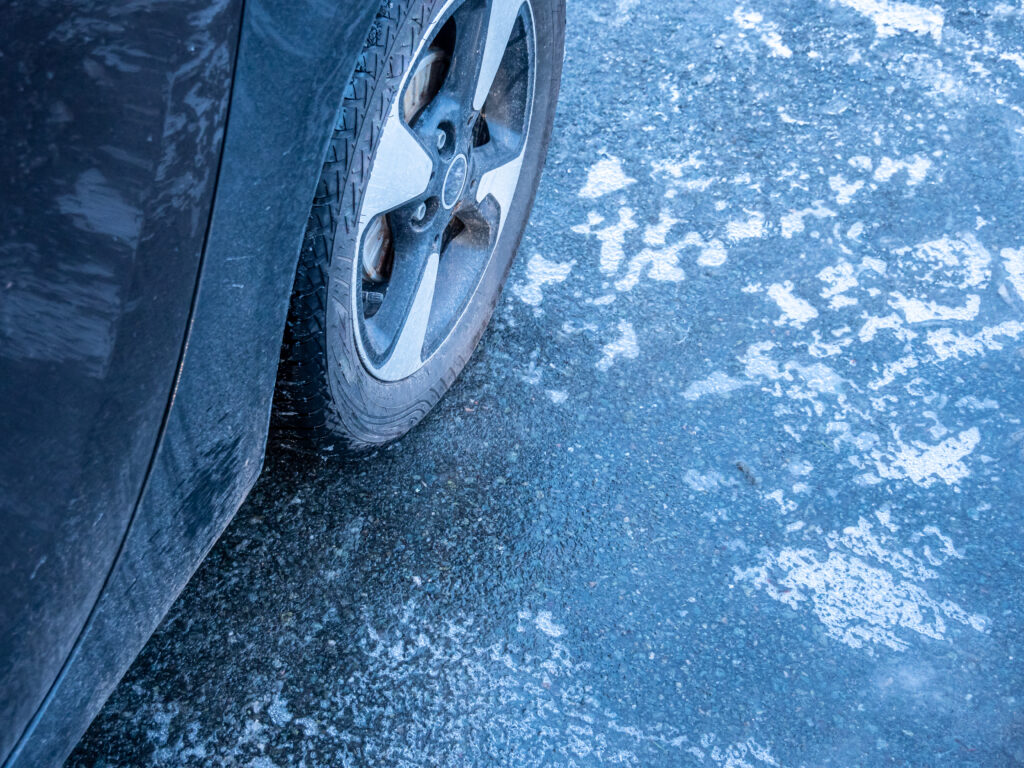
This misrepresents Minnesota law. The law does not require a driver to see the specific patch of ice that caused a crash. Instead, the law requires a driver to recognize the conditions that create black ice and to adjust their driving accordingly. A driver who fails to do this acts negligently.
Foreseeability: The Heart of a Black Ice Negligence Claim
Your entire case will revolve around the legal concept of foreseeability. To prove another driver was negligent, your attorney must demonstrate that a reasonably prudent person, under the same circumstances, would have foreseen the likelihood of encountering black ice and would have taken steps to avoid a crash.
A skilled attorney builds a case to show the black ice was a predictable hazard.
The investigation will focus on proving the driver should have recognized the potential danger.
- Temperature. Was the temperature at or near 32°F? When temperatures hover around the freezing point, melting snow can refreeze into a thin, transparent layer of ice.
- Location. Did the accident happen on a bridge, overpass, or in a heavily shaded area? The Minnesota Department of Transportation warns drivers that these surfaces freeze much faster than the rest of the roadway because cold air circulates above and below them. A prudent driver knows to be extra cautious in these spots.
- Time of day. Black ice most commonly forms in the early morning after an overnight freeze or in the evening as temperatures drop again.
- Recent weather. Did the area have recent rain, sleet, or melting snow? Any source of moisture combined with freezing temperatures creates a recipe for black ice.
Establishing these conditions were present, your attorney can argue the other driver had clear warning signs of a potential danger and a legal duty to slow down and drive with extreme caution.
Minnesota's basic speed law: A driver's strict duty
Minnesota's "basic speed law" provides the legal foundation for a black ice claim. This law, found in Minnesota Statutes § 169.14, is clear: a driver's speed must be reasonable and prudent for existing conditions. The posted speed limit is the maximum speed allowed under ideal conditions.
When hazards like potential ice exist, the law requires a driver to reduce their speed. A driver who loses control on black ice while traveling at or even slightly below the speed limit, by definition, drove too fast for the conditions and acted negligently.
Building the case: Evidence That proves a driver's negligence
Because insurance companies aggressively fight these claims, your attorney must build your case on a foundation of solid evidence. Your legal team will launch an immediate and comprehensive investigation to gather the proof needed to show the other driver's choices, not just the ice, caused your injuries.
Expert Testimony
In a black ice case, expert witnesses are often essential to prove your case.
- Meteorologists. A forensic meteorologist can provide a certified report detailing the exact weather conditions, including temperature, humidity, and precipitation, at the precise time and location of your accident. This expert report establishes that the circumstances were ripe for black ice formation, making the hazard foreseeable.
- Accident Reconstructionists. These experts analyze the physical evidence from the crash—skid marks, vehicle damage, debris fields, and final resting positions—to calculate the other driver's speed at the moment of impact. Their testimony can prove the driver was traveling at an unsafe speed, directly violating the basic speed law.
Gathering other forms of evidence
Your attorney will also gather a wide range of other evidence to support your claim.
- Police reports. While the officer will note the icy conditions, the report also contains crucial diagrams, measurements, and driver statements that can help establish the sequence of events.
- Witness statements. Other drivers who were on the same road can testify about the prevailing conditions. Their testimony that they were successfully navigating the area at a much slower speed can be powerful evidence of the other driver's carelessness.
- Property maintenance records. If the black ice formed in a commercial parking lot in a place like Willmar or Oakdale, an attorney will investigate if the property owner failed in their duty to properly salt or sand the area, potentially adding another defendant to the case.
This collection of evidence works together to shift the focus from the ice's existence to the driver's failure to respond to the ice's foreseeable danger.
No-Fault Insurance: Your First Source of Recovery
While your legal team builds the liability case against the at-fault driver, Minnesota's No-Fault insurance system provides the immediate financial support you need to begin your recovery.
Your PIP benefits provide immediate help
Regardless of who was at fault or the complex arguments about the black ice, your own Personal Injury Protection (PIP) coverage is your primary source for benefits. Your PIP will pay for your initial medical bills and a portion of your lost wages up to your policy limits. This is a crucial lifeline that allows you to get medical treatment without paying out-of-pocket while the more contentious liability claim is fought.
Filing a claim against the at-fault driver
Once your injuries meet a certain legal threshold, you can "step outside" the No-Fault system and file a bodily injury liability claim against the at-fault driver's insurance company.
This is where you seek compensation for damages your PIP did not cover, including future medical expenses, the remainder of your lost wages, and your non-economic damages like pain, suffering, and emotional distress.
FAQ for Black Ice Accidents in Minnesota
I lost control on black ice and caused a crash. Am I automatically at fault?
You will be presumed to be at fault, and your insurance company will have a difficult time defending the claim. The driver who loses control and strikes another vehicle bears the initial burden of proving they were driving in a reasonable and prudent manner.
You would need to show that the ice was in a completely unforeseeable location (e.g., on a warm, sunny day) and that you were already driving at an appropriately reduced speed when you lost control.
What if multiple cars crashed on the same patch of ice?
These multi-car pile-ups create a complex legal challenge. An investigator must assess liability for each individual impact. The first driver who lost control may be at fault.
Any subsequent driver who followed too closely and could not stop in time also acted negligently. An accident reconstruction expert is needed to untangle the sequence of events and assign fault to each driver. You may have claims against several different insurance policies.
I was a passenger in a car that slid on black ice. What are my rights?
As an innocent passenger, you have a clear right to seek compensation. You would file a claim against the driver of the car you were in. Their failure to maintain control of the vehicle, even on black ice, can be considered negligence if they were not driving appropriately for the foreseeable conditions. You would make a claim against their auto insurance policy.
Can I sue the government for the black ice on a state highway or city street?
Suing a government entity for icy road conditions is extremely difficult. Minnesota law gives government bodies significant immunity from lawsuits related to their discretionary functions, which includes decisions about when and where to plow or salt.
While not impossible in cases of extreme and known hazards that were ignored for an unreasonable time, these claims are rare. The focus is almost always on the negligence of the drivers who fail to use the road safely.
Building a Strong Legal Strategy from an Unseen Hazard
An accident on black ice can leave you feeling powerless, as if you were a victim of nature itself. The law, however, views the situation differently. The law places a responsibility on every driver to be vigilant, cautious, and to adapt to the predictable dangers of a Minnesota winter.

You should not have to pay the price for another driver's failure to meet that responsibility. A legal team with experience in Minnesota winter accident claims knows how to gather the evidence and build the expert-driven case needed to overcome the insurance company's "unavoidable accident" defense.
They prove that a driver's negligent choices, not the weather, caused your injuries.
The attorneys at Tyroler Leonard Injury Law, Isaac Tyroler and Rachel Sperling Leonard, are native Minnesotans who have a deep understanding of how to litigate complex winter accident cases.
We represent injured people throughout Minnesota and Wisconsin from our offices in Minneapolis, Oakdale, and Willmar. We know how to demonstrate foreseeability and hold careless drivers accountable, even when the hazard was invisible.
Se habla español. Llámenos para una consulta gratuita.
Call our office at (651) 259-1113 or complete our online contact form for a free, no-obligation consultation to learn how we can fight for you.