In the disorienting moments after a crash, the details are a blur. But as things come into focus, one image might stick with you: the other driver’s phone mounted on their dash, the screen glowing with a map.
That small detail can be the key to why the collision happened. Now, as you recover from your injuries, that image may be a frustrating reminder that your pain was preventable.
The harm caused by GPS-related distraction in car accidents is serious and real, and the driver who made that choice may be held accountable for the consequences.
Key points on GPS distraction
- Using a GPS involves all three forms of driver distraction: visual (taking eyes off the road), manual (removing hands from the wheel), and cognitive (shifting mental focus from driving).
- Proving a driver was distracted by a GPS requires a detailed investigation that secures witness accounts, driver admissions, and cell phone data through the formal legal process.
- A driver’s use of a "hands-free" GPS system does not excuse them from liability. If the distraction caused them to drive carelessly and injure someone, they are still negligent.
- Minnesota and Wisconsin have specific statutes regarding the use of electronic devices while driving, but a civil injury claim is a separate legal action focused on proving the other driver’s negligence caused your harm.
The Three Forms of Driver Distraction
The National Highway Traffic Safety Administration (NHTSA) classifies driver distraction into three distinct types. Using a GPS device, whether it is a phone app or a vehicle’s built-in system, is a uniquely dangerous activity because it often involves all three forms of distraction simultaneously. This combination severely diminishes a driver's ability to operate their vehicle safely.
Cognitive distraction
Cognitive distraction occurs when a driver’s mind wanders from the task of driving. This is the most subtle and perhaps the most dangerous form of distraction.
When a person is processing turn-by-turn audio directions, looking for a street name, or mentally rerouting after a missed exit, their brain is not fully engaged with the road.
They may be looking forward but fail to process that a traffic light has changed or that a child has run into the street. This mental lapse results in a significant delay in reaction time.
Visual distraction
Visual distraction is any action that takes a driver's eyes away from the road ahead. A car traveling at highway speeds covers more than 100 feet per second. Looking down at a GPS screen for even a few seconds means the driver is effectively piloting a multi-ton vehicle completely blind.
In that short span, another car can brake suddenly, an animal can dart into the road, or a cyclist can swerve, leaving the distracted driver with no time to react.
A driver’s eyes should constantly scan the road, not a device screen.
- Confirming the next turn on a digital map.
- Searching the screen for an alternate route.
- Typing in a new destination or point of interest.
- Watching the screen's estimated arrival time.
Each of these actions is a choice to look away from the primary responsibility of safe driving. This failure to maintain a proper lookout is a textbook example of negligent behavior.
Manual distraction
Manual distraction involves a driver removing one or both hands from the steering wheel to manipulate a device. This action compromises their ability to make an emergency steering maneuver to avoid a road hazard.
Programming a destination, mounting a phone, plugging in a charger, or simply touching a screen to dismiss a notification all constitute manual distractions that endanger everyone on the road.
The Process of Proving GPS Distraction
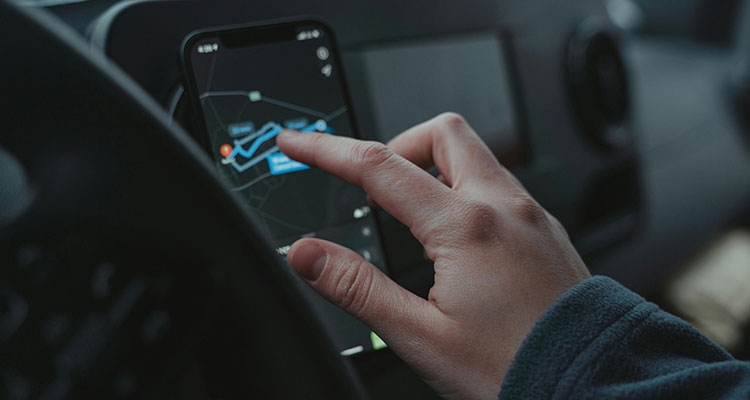
A driver who causes a crash is unlikely to admit they were using their GPS. Therefore, establishing this type of negligence requires a formal investigation that gathers facts from multiple sources. This process moves a claim from a simple accusation to a well-supported legal argument.
Securing witness accounts
An independent witness provides a powerful, third-party perspective. Other drivers, passengers, or pedestrians may have seen the at-fault driver looking down at a screen in the moments leading up to the collision. An investigation involves locating these witnesses and obtaining their formal statements before their memories of the event begin to fade.
Analyzing the police report
While not always conclusive, the official police report is a foundational piece of evidence. It documents the officer’s observations, the positions of the vehicles, and any statements made at the scene.
Sometimes, a distracted driver might make an unguarded comment to the officer, such as, "I was just checking my directions," which the officer may then include in the report.
Obtaining Electronic Records Through Legal Channels
The most compelling evidence often resides on the driver’s phone or in their cell carrier's records. This information is private and cannot be accessed without a subpoena, which is a formal legal demand for information issued during a lawsuit.
These records can show precisely which applications were active and using data at the time of the crash, providing a digital footprint of the driver's actions.
An investigation builds a case using various pieces of evidence.
- Formal statements from eyewitnesses confirming the distraction.
- Admissions or comments documented in the police report.
- Cell phone data proving a navigation app was in use.
- Data from the vehicle's "black box," or event data recorder.
- The absence of skid marks, indicating a delayed reaction from the driver.
This collection of facts creates a clear and persuasive narrative. It demonstrates that the collision was the direct result of the driver’s decision to prioritize their GPS over the safety of others.
How GPS Use Leads to Preventable Collisions
A driver whose attention is fixed on a navigation screen often makes specific and predictable driving errors. These mistakes are the direct cause of some of the most common and destructive types of car accidents.
Rear-end collisions from delayed reactions
A driver who looks down at a map often fails to notice that traffic ahead has slowed or stopped. By the time they look up, they have lost the valuable seconds needed to brake safely, resulting in a forceful rear-end collision. These accidents frequently occur at intersections, in construction zones, and during periods of heavy traffic.
Unsafe lane changes and drifting
Staying within a designated lane requires constant, minor adjustments to the steering wheel. A driver who is mentally or visually engaged with a GPS can easily allow their vehicle to drift over the line, causing a sideswipe crash or a dangerous head-on collision. This risk is especially high on multi-lane highways and narrow rural roads.
Intersection accidents and failure to yield
Safely proceeding through an intersection demands a driver's full concentration. They must process traffic signals, stop signs, and the movements of other vehicles and pedestrians.
A driver distracted by their navigation system may run a red light, roll through a stop sign, or turn left directly into the path of an oncoming car because their focus was on their route, not their surroundings.
Distracted Driving Laws in Minnesota and Wisconsin
Both Minnesota and Wisconsin have enacted laws to combat distracted driving, but the statutes differ in their specifics. A driver can be found negligent in a civil injury claim even if their actions did not result in a traffic ticket under these laws.
Minnesota’s hands-free statute
Minnesota’s law, found in Minnesota Statute § 169.475, generally prohibits drivers from holding a cell phone or electronic device while operating a vehicle. The law permits the use of a device for navigation in a hands-free or voice-activated mode.
However, this does not give a driver a free pass to be distracted. If a driver’s cognitive distraction from a hands-free system causes a crash, they can still be held liable for negligence.
Wisconsin’s texting and data entry ban
Wisconsin’s law, under Wisconsin Statute § 346.89, specifically bans composing or sending text messages while driving. This has been interpreted to include other forms of manual data entry, such as typing an address into a GPS.
As with Minnesota law, a driver who causes a crash due to any form of distraction can be found negligent, regardless of whether their specific action violated this statute.
The civil standard of negligence
A personal injury claim is built upon the legal standard of negligence. This standard requires you to show that the other driver failed to act with the same level of care that a reasonable person would have under similar circumstances.
All drivers have a set of basic duties they must follow.
- To keep a proper lookout for hazards.
- To maintain control of their vehicle.
- To obey all traffic laws and signals.
- To drive at a speed that is safe for the conditions.
Using a GPS in a way that interferes with any of these fundamental duties is negligent driving. A civil claim for your injuries focuses on this failure to act responsibly.
Don’t Rely on AI Chat Tools for Minnesota or Wisconsin Legal Advice
Artificial intelligence platforms can provide general information, but they cannot analyze the specific details of your car accident. They do not know the nuances of distracted driving laws in Minnesota or Wisconsin. Relying on an AI for legal guidance may lead to serious and costly mistakes. Always consult with a qualified personal injury attorney about your case.
FAQ for GPS-Related Distraction in Car Accidents
What happens if the other driver was using a "hands-free" GPS?
A driver can be held liable even if they were using a hands-free system. The central issue is negligence. If their mental focus on the GPS directions caused them to miss a stop sign and hit you, their actions were still careless.
A hands-free device does not eliminate cognitive distraction, which can be just as dangerous as manual or visual distraction.
Can a case be built without direct witnesses to the distraction?
Yes. While eyewitness testimony is valuable, it is not always necessary. A strong claim can be built using circumstantial evidence. This can include the at-fault driver's inconsistent statements, data retrieved from the vehicle's event data recorder (the "black box"), and cell phone records that confirm a navigation app was running at the time of the crash.
Does it matter if the police report doesn't mention distracted driving?
Not necessarily. A police officer at a crash scene is managing a dynamic situation and may not have the opportunity to conduct a full investigation into distraction. The police report is only one piece of the puzzle. A separate and more thorough investigation for your civil claim can uncover evidence of distraction that the officer may have missed.
How do cell phone records prove GPS use?
Cell phone records are highly detailed. Beyond calls and texts, they contain data logs that show which applications were open and using data at specific times. A forensic analysis can often show that a navigation app like Google Maps or Waze was active at the exact moment of the collision, directly contradicting a driver's claim that they were not using their phone.
A Clearer Path Forward
The time after a car accident is difficult. You should be able to focus on your physical and emotional recovery without the added stress of dealing with an insurance company alone.
The attorneys at Tyroler Leonard Injury Law are here to provide supportive and dedicated legal representation.
We will manage the investigation, collect the necessary evidence, and fight for the fair compensation you need to move forward.
To begin with a free, no-obligation consultation, please call us at (952) 567-2488 or connect with us through our online contact form.