You make the call to the other driver’s insurance company, expecting a straightforward conversation. You explain that their client ran a red light. The adjuster on the line is polite but firm: "Our client states you were speeding and that the light was yellow.
Without independent proof, we see this as a case of shared fault." The conversation ends, and you are left with a feeling of deep frustration. It is your word against theirs. This is the moment when people realize the power of a single piece of evidence.
Knowing how dashcam footage can help or hurt your car accident case is the first step toward cutting through the denials and showing what really happened.
The unblinking eye: Key points on dashcam evidence
- Dashcam footage provides objective, powerful evidence that can settle disputes about fault, showing exactly how a collision occurred without relying on conflicting memories.
- While dashcam video can prove another driver's negligence, it is a double-edged sword; your own footage will also reveal any of your own driving mistakes, which the other side can use against you.
- You have a legal duty to preserve your dashcam footage after an accident. Deleting or altering the video can result in serious legal penalties and damage your claim.
- Video evidence is often available from sources beyond your own vehicle. A detailed investigation can uncover footage from other drivers' dashcams, nearby business surveillance, or traffic cameras.
The Power of Objective Evidence in a Car Accident Claim
A personal injury claim rests on your ability to prove another party’s negligence caused your harm. When evidence is limited to eyewitness testimony, insurance companies often exploit inconsistencies to assign partial blame to you, thereby reducing their financial responsibility.
Dashcam footage changes this dynamic by providing an impartial, frame-by-frame record of the event.
Establishing clear fault and countering denials
The primary benefit of dashcam video is its power to establish fault definitively. The footage can show the sequence of events, the color of a traffic light, and the actions of each driver in the seconds before the collision.
This kind of visual proof is exceptionally difficult for an insurance adjuster or defense attorney to dispute. A clear video recording can prove many forms of driver negligence.
- A driver running a red light or stop sign.
- An unsafe lane change without signaling.
- A driver tailgating before a rear-end crash.
- A driver failing to yield the right-of-way on a left turn.
- A driver clearly looking down at their phone.
This evidence transforms your claim from a debatable story into a documented fact. It provides the leverage needed to push back against unfair blame-shifting tactics.
Capturing the full context of the collision
Dashcam video often records more than just the moment of the crash. The preceding minutes of footage can be just as valuable. This context might reveal a pattern of reckless behavior from the other driver long before they reached you.
The video might show the other driver performing dangerous actions.
- Weaving aggressively through traffic.
- Speeding excessively for the road conditions.
- Braking erratically without cause.
- Almost causing other accidents prior to yours.
This evidence of a continued pattern of recklessness strengthens your argument that their negligence was not a momentary lapse but a conscious disregard for the safety of others.
When Your Own Dashcam Can Complicate Your Case
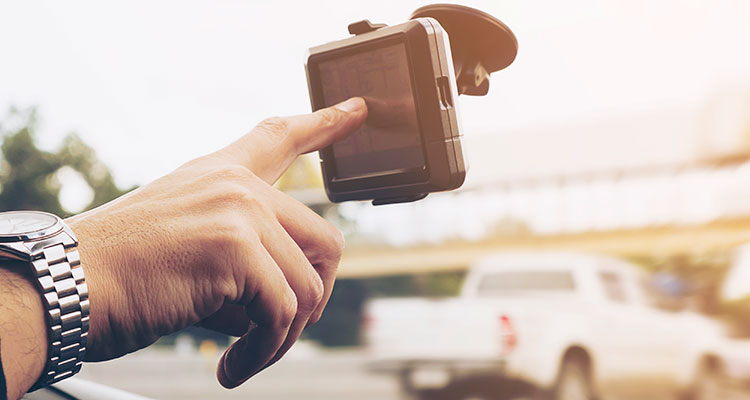
A dashcam is a tool for protection, but it is an impartial one. It records your driving with the same unflinching detail as it records others. This means it can capture information that the other party’s legal team may try to use to build a case against you. A thorough review of your own footage is a necessary step before deciding how to proceed.
Revealing your own driving errors
The camera documents everything. It will show if you were driving a few miles per hour over the speed limit. It will record if you were adjusting your stereo or taking a sip of coffee at a critical moment.
The opposing side will scrutinize this footage, looking for any action they can portray as a contributing factor to the accident. Under the comparative negligence laws in Minnesota and Wisconsin, this can directly reduce the compensation you may be able to pursue.
The legal duty to preserve evidence
After an accident, you have a legal obligation not to destroy potential evidence. This is known as the duty to preserve. Intentionally deleting your dashcam footage, especially after deciding to pursue a claim, is an act called "spoliation of evidence."
If a court finds that you intentionally destroyed unfavorable evidence, it can impose serious sanctions. A judge may even instruct a jury to assume that the deleted footage would have proven the other side’s argument. You should take immediate steps to secure your video evidence.
- Save the relevant video files to a secure location, like a computer or cloud drive.
- Turn off the camera's loop-recording feature to prevent the file from being overwritten.
- Do not edit, trim, or alter the original video file in any way.
Following these steps protects the integrity of your evidence and shields you from accusations that you are hiding facts about the case.
Locating and Securing Video Evidence After a Crash
You may not be the only one with a video record of what happened. The prevalence of cameras means that many accidents are captured from multiple angles.
A comprehensive investigation involves identifying and obtaining all available footage from other sources.
Finding footage from other vehicles
The official police report is the first place to look. It may contain the names and contact information of witnesses. An investigator can reach out to these individuals to determine if they had a dashcam running.
Commercial trucks, delivery vans, and rideshare vehicles are frequently equipped with cameras, and their footage can provide a different and valuable perspective on the collision.
Requesting video from businesses and government cameras
Many crashes occur in commercial areas or at busy intersections where surveillance cameras are common. A prompt investigation involves canvassing the area for businesses with cameras pointed toward the road.
Many establishments, from gas stations to storefronts, have security systems that may have captured the event. Government-operated traffic cameras are another potential source.
The Minnesota Department of Transportation provides public information about its traffic camera network on its official website. While many of these cameras do not record, some do, and obtaining that footage requires a formal request made quickly, as retention periods are often very short.
How Dashcam Footage Is Used in the Legal Process
Once secured, dashcam video becomes a cornerstone of your personal injury claim. It affects every stage of the legal process, from initial insurance negotiations to a potential courtroom trial.
Strengthening settlement negotiations
Presenting an insurance company with clear, undeniable video proof of their client’s fault puts you in a position of strength. It severely limits the adjuster’s ability to argue about liability.
This often leads to a more reasonable and timely settlement offer, as the insurer may wish to avoid the expense of fighting a case they are likely to lose in court. The footage serves as powerful leverage throughout these discussions.
Using footage with accident reconstructionists
In complex cases, an attorney may work with an accident reconstructionist. This professional uses physics and engineering principles to analyze a crash. Dashcam footage is an invaluable tool for them. They can use the video to calculate vehicle speeds, determine the point of collision, and create a scientific model of the accident. This expert analysis, based on the video evidence, can produce a compelling report that an insurance company finds very difficult to refute.
Legal standards in Minnesota and Wisconsin
The video can be used to prove a direct violation of state traffic law. For example, it could show a breach of Minnesota’s statutes on traffic signals under Minn. Stat. § 169.06 or Wisconsin’s laws regarding yielding under Wis. Stat. § 346.18.
Remember that both states have firm deadlines for filing a lawsuit. In Minnesota, you generally have six years from the accident date. In Wisconsin, the statute of limitations is three years. Acting quickly to preserve your dashcam footage is a key first step in protecting your right to file a claim within these timelines.
Don’t Rely on AI Chat Tools for Minnesota or Wisconsin Legal Advice
An artificial intelligence tool can give you general information, but it cannot analyze the specific footage from your car accident. It has no knowledge of the rules of evidence in Minnesota or Wisconsin courts.
Relying on an AI for legal guidance may cause you to make significant errors in your case. Always consult with a qualified personal injury attorney for advice about your situation.
FAQ for How Dashcam Footage Can Help or Hurt Your Car Accident Case
What happens if the other driver has footage but will not share it?
If a lawsuit is filed, your attorney can use the formal discovery process to legally compel the other party to produce their dashcam video.
A subpoena can be issued, and if they refuse or claim it was deleted after the fact, they may face serious penalties from the court for spoliation of evidence.
Does the audio on my dashcam video matter?
While the video is the primary evidence, audio can also add important context. It can capture the sound of tires screeching, the force of the collision, and any spontaneous statements made by you or the other driver immediately after the crash. However, be aware of state laws concerning recording conversations if you frequently have passengers.
Can the other side claim my dashcam video was edited?
Yes, they can. This is why it is so important to preserve the original, unaltered file. If the opposing party alleges tampering, they can hire a forensic expert to analyze the video’s metadata for any signs of editing. If a court finds that the footage was altered, it will likely be ruled inadmissible, and your credibility will be severely damaged.
What if the video is blurry or only shows part of the accident?
Even imperfect footage can be extremely useful. A blurry video may still show the color of a traffic light. A recording that cuts off before the collision can still establish the speed and lane position of both vehicles. An attorney can work with a video expert to enhance the quality or analyze the available frames to pull out key details.
From Pixels to Proof: Let's Review Your Case
That small camera on your dashboard may hold the key to a fair resolution of your car accident claim. The attorneys at Tyroler Leonard Injury Law are prepared to review your footage and help you build the strongest possible case.
We will manage the complex process of securing all available evidence and negotiating with the insurance company so you can dedicate your energy to your recovery.
We are ready to listen to your story and provide clear, supportive guidance. To begin with a free, no-obligation consultation, please call us at (952) 567-2488 or connect with us through our online contact form.