After an accident, the story fractures. The other driver remembers a different version of events. Witnesses offer conflicting accounts. Your own memory, clouded by trauma and shock, feels incomplete.
In this storm of "he said, she said," you are left wondering how you will ever prove what truly happened. But in the background of our daily lives, a silent, unbiased witness is often watching.
A traffic camera, a storefront security system, or a neighbor's doorbell camera may hold the key. Getting a firm grasp of the role of surveillance footage in proving negligence is the first step toward transforming your case from a contentious dispute into a matter of objective fact.
This digital evidence can cut through the noise and show the truth, frame by frame, and an experienced Willmar personal injury lawyer can help ensure that critical footage is located, preserved, and used to support your claim.
Key takeaways
- Surveillance footage acts as a neutral, third-party witness that can definitively establish how an accident occurred, often ending disputes about fault.
- This video evidence is not permanent. Most systems record over old footage automatically, sometimes within 24 to 72 hours, making immediate action essential to preserve it.
- Sources of valuable footage are everywhere, including traffic cameras, business security systems, doorbell cameras, and vehicle dashcams.
- You cannot simply ask for and receive surveillance footage. Obtaining it often requires a formal legal process, including a preservation of evidence letter and potentially a court-ordered subpoena.
- A clear video showing the other party's negligence is one of the most powerful tools for convincing an insurance company to offer a fair settlement and avoid a lengthy court battle.
Why Proving Negligence Is a Battle of Evidence
Before you can recover compensation for your injuries, you must prove that another party was negligent. This legal term means they failed to act with reasonable care, and their failure caused your harm.

This is rarely straightforward. The other driver, property owner, or their insurance company will almost always dispute their responsibility.
The "he said, she said" dilemma
Without objective proof, a personal injury claim often devolves into a credibility contest. The other driver may claim you were speeding. A property owner may argue you were not paying attention when you slipped and fell.
When it is just your word against theirs, an insurance company has the leverage it needs to deny your claim or make a lowball offer, knowing it would be difficult for you to win in court.
The fallibility of human memory
Even well-intentioned witnesses can be unreliable. Memory is not a perfect recording. The stress of an accident can distort recollections of speed, distance, and the sequence of events.
A witness might be confident you had the red light when, in reality, it was yellow. This is why objective, electronic evidence is so powerful.
How Video Footage Becomes Your Unbiased Witness
A video camera does not have a motive. It does not get flustered or forget details. It simply records what happened. This quality makes surveillance footage one of the most compelling pieces of evidence you can have in a personal injury case.
It establishes a clear sequence of events
In a car accident case, footage can end the debate over who had the right-of-way. It can show:
- Which driver ran a red light or a stop sign.
- A driver making an illegal lane change or turn.
- The exact point of impact and the forces involved.
It demonstrates dangerous conditions
For a slip and fall or premises liability claim, a camera can document the hazard that caused your injury. It can prove:
- A spill on a grocery store floor was present for a long time and employees failed to clean it up.
- A poorly lit staircase or a broken handrail created a dangerous condition.
- Inadequate security at an apartment complex allowed a preventable assault to occur.
It captures the at-fault party's actions
Video can expose specific negligent behaviors that are otherwise hard to prove. It might show a commercial truck driver looking at their phone moments before a collision, or a dog owner letting their aggressive dog run off-leash in an Oakdale park just before it attacked you.
The Hunt for Evidence: Where to Find Surveillance Footage
Valuable footage can come from a surprising number of sources. The key is to think creatively and act quickly to identify all potential cameras that may have captured your accident.
Many cameras may have recorded the moments leading up to your injury.
- Government traffic cameras. Many major intersections in cities like Minneapolis are monitored by traffic management cameras.
- Business security systems. Gas stations, convenience stores, banks, and retail shops all have cameras pointed at the street and their parking lots.
- Residential doorbell cameras. Systems like Ring and Nest are now ubiquitous and often capture a wide view of the street, providing clear footage of a collision.
- Vehicle dashcams. Your own dashcam, or one from another vehicle that stopped at the scene, can provide a clear, firsthand view.
- ATM cameras. The camera on an ATM can sometimes capture a useful angle of a nearby pedestrian accident.
Identifying these sources is only the first step. The next, and most urgent, challenge is securing the footage before it is erased forever.
The race against automatic deletion
Most surveillance systems are not designed for long-term storage. They operate on a continuous loop, automatically recording over the oldest footage to make space for the new.
This retention period can be shockingly short. A convenience store's system might delete footage every 72 hours. A city traffic camera might only hold data for 24 hours. This means there is a very narrow window of opportunity to preserve this game-changing evidence.
The Legal Process of Securing Video Evidence
You cannot simply walk into a business and demand a copy of their security footage. The owner may be uncooperative, worried about liability, or simply too busy to help. Obtaining this evidence requires a formal legal process that an attorney can initiate immediately.
The preservation of evidence letter
The first formal step is to send a "preservation of evidence letter," also known as a spoliation letter. This is a legal document sent to the owner of the camera that officially notifies them of a potential claim and demands that they preserve the relevant footage.
Once they receive this letter, they have a legal duty not to destroy the evidence. Intentionally deleting footage after receiving this letter is called spoliation of evidence and can carry severe legal penalties for the offender.
When a subpoena becomes necessary
Even with a preservation letter, a business owner is not obligated to hand the footage over to you simply. They may require a subpoena, a formal court order, that compels them to produce the evidence.
An attorney can draft and serve a subpoena as part of the legal process to force them to comply. Overcoming the hurdles to obtain footage requires legal experience and persistence.
An attorney can navigate the common roadblocks preventing injured people from getting the needed evidence.
- Denial of footage. The owner may falsely claim the cameras were not working or that they have no relevant video.
- Uncooperative parties. A business may simply ignore your informal requests, hoping you will go away.
- Technical difficulties. The owner may not know how to properly export the video file, resulting in a corrupted or unusable file.
- Providing the wrong footage. They might provide video from the wrong camera or the wrong time segment, requiring further legal action to correct.
These are not just logistical hassles; they are legal challenges that often require an attorney's intervention to resolve.
How a Video Can Transform Your Injury Claim
Once obtained, the surveillance footage becomes the centerpiece of your case, influencing every stage from negotiation to a potential trial.
Shutting down insurance company tactics
Insurance adjusters are trained to create doubt. They will question your story and find any excuse to blame you partially.
Presenting them with a clear video of their client running a red light can instantly shut down these arguments. It forces them to deal with the objective facts, often leading to a much more serious and fair settlement negotiation.
Proving the full extent of the harm
A video does more than just show fault. It can also document the violence of the impact, which helps to justify the severity of your injuries. A dramatic video of a high-speed T-bone collision makes it much harder for an insurer to argue that your spinal injury is "minor."
Using evidence in court
If your case goes to trial, the video is presented to the jury. However, it is not as simple as playing a file. The evidence must be authenticated, meaning your attorney must legally prove that the video is a true and accurate depiction of the events and has not been altered.
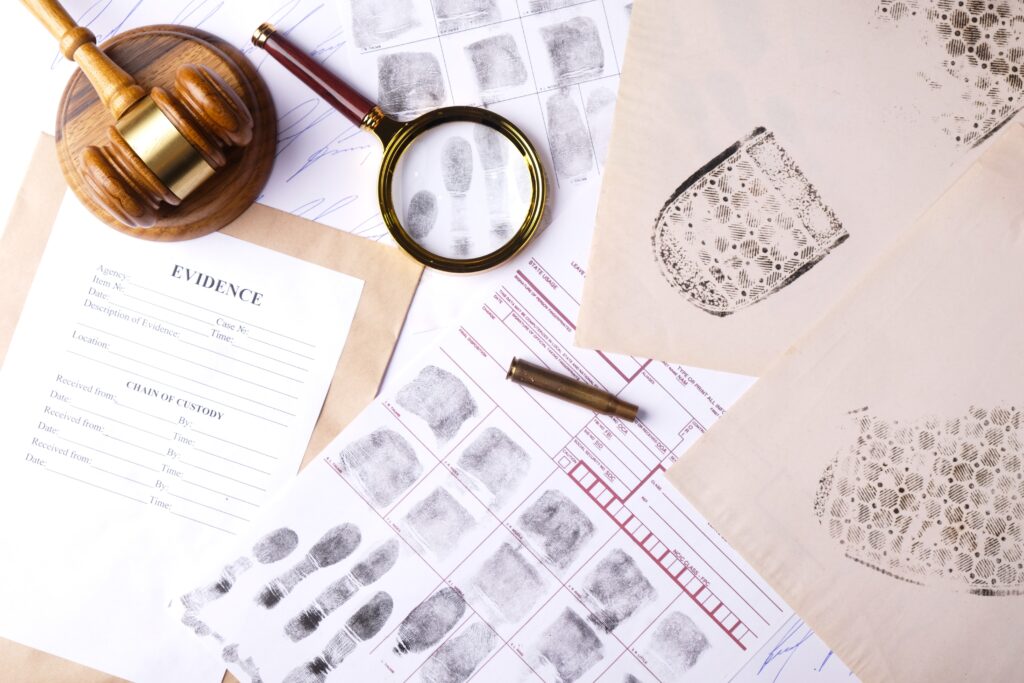
According to legal standards, like the Minnesota Rules of Evidence, this is a formal process that requires a solid foundation.
FAQ for The Role of Surveillance Footage in Proving Negligence
What if the video footage shows that I might have been partially at fault?
This is a possibility, and it is important to know this early. Both Minnesota and Wisconsin use a modified comparative fault system.
An attorney analyzes the footage to assess your potential percentage of fault and build a legal strategy around it. It is far better to know this from the start than to be surprised by the video at a later stage.
How do I find out if there are government-owned traffic cameras at the intersection where my accident happened?
Your attorney can file formal requests with the state or city Department of Transportation to identify the location of any traffic management cameras. These entities have their own procedures and very short retention periods, so these requests must be made immediately following a crash.
Can audio from a security camera be used as evidence?
Yes, if a camera also recorded audio, that audio can be powerful evidence. It might capture the sound of squealing tires before impact, a driver admitting fault immediately after the crash, or an aggressive dog barking before an attack.
However, state laws on audio recording are complex, and an attorney can determine their admissibility.
What happens if a business owner deletes the video after receiving a preservation letter?
If you can prove that the owner intentionally destroyed the evidence after being notified to preserve it, it is considered spoliation. A judge can issue serious sanctions, including instructing the jury to assume that the destroyed footage would have harmed the owner's case. This can be a powerful tool for winning your claim.
From a Blurry Memory to Clear Proof
You should not have to fight for compensation based on a fractured and contested story. Objective evidence can provide the clarity and leverage you need to hold a negligent party accountable.
An experienced legal team knows where to look for this evidence, how to secure it legally, and how to use it to build a robust, undeniable case on your behalf.
The attorneys at Tyroler Leonard Injury Law, Isaac Tyroler and Rachel Sperling Leonard, understand the critical importance of a swift and thorough investigation.
We work tirelessly for clients across Minnesota and Wisconsin from our offices in Minneapolis, Oakdale, and Willmar to uncover and preserve the evidence that can win a case. We handle the legal fight so you can focus on healing.
Se habla español. Llámenos para una consulta gratuita.
Call our office today at (651) 259-1113 or complete our online contact form for a free, no-obligation consultation.